
How to Get Clean Edges and Smooth Coverage Without Damaging Surfaces
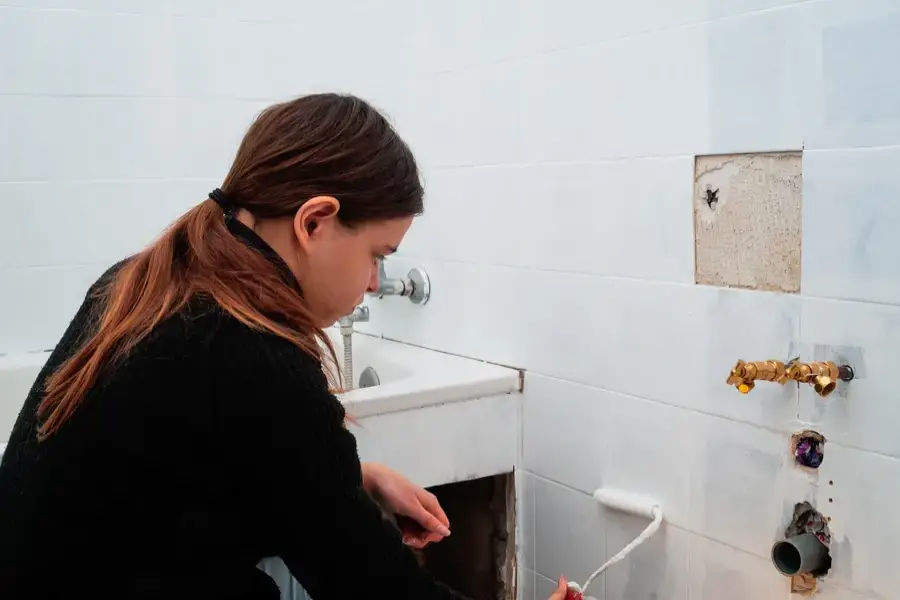
When painting around tiles and fixtures in a bathroom, the key is careful prep, the right tools, and slow, steady work. Use painter’s tape to protect tile edges, remove or mask fixtures, and cut in with a small angled brush. Rushing leads to drips and uneven lines. With the right steps, bathroom painting around tubs, sinks, and tile backsplashes can look clean and professional.
What You Need Before Starting
Before you open a can of paint, gather the right tools. Bathrooms are tight spaces. You need control and patience.
- High-quality painter’s tape
- Small angled brush (1 to 2 inches)
- Mini foam roller
- Drop cloths or plastic sheets
- Mild cleaner or degreaser
- Caulk and caulk gun
- Screwdriver for removing hardware
Clean all tile edges and fixtures first. Soap scum and moisture can stop paint from sticking. Let everything dry fully before starting any bathroom painting work.
Step-by-Step Process for Clean Results
Follow these steps to get sharp lines and smooth coverage around tiles and fixtures.
- Remove what you can. Take off towel bars, switch plates, and light covers. It is easier to paint behind them than cut around them.
- Clean and dry the surface. Wipe down walls, tile edges, and trim. Let the area dry completely.
- Apply painter’s tape carefully. Press tape firmly along tile edges and around fixtures. Smooth it down to prevent paint bleed.
- Seal gaps with caulk. If there are small gaps between tile and wall, apply a thin bead of caulk. Let it dry before painting.
- Cut in first. Use an angled brush to paint along tile edges, corners, and around fixtures. Work in small sections.
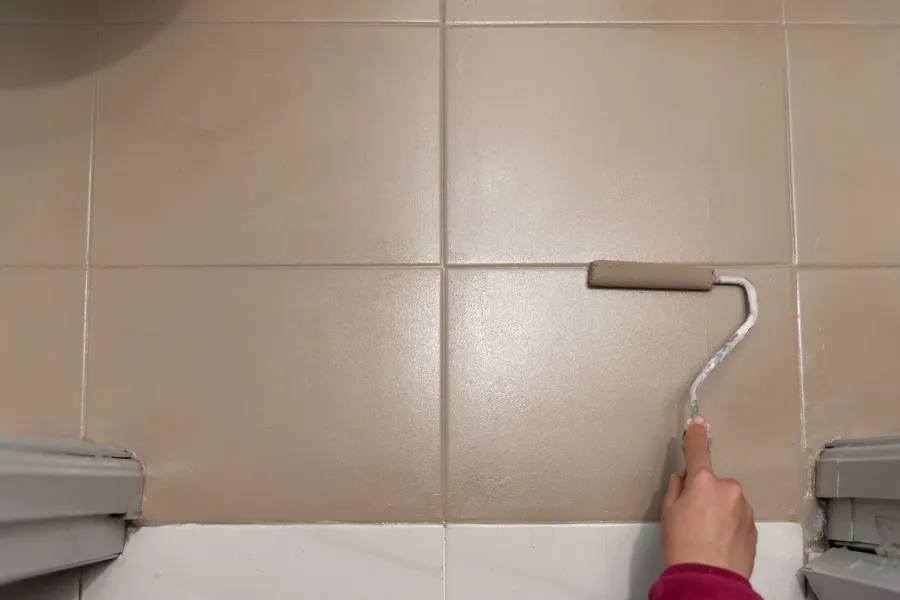
- Roll the larger areas. After cutting in, use a mini roller to blend the paint into the wall.
- Remove tape at the right time. Pull tape off while the paint is slightly damp. Pull at a 45-degree angle for clean lines.
This method works well for full bathroom painting projects and small touch-ups.
Common Mistakes to Avoid
Small errors can ruin the final look. Here are mistakes homeowners often make:
- Skipping cleaning before painting
- Using cheap tape that lets paint bleed through
- Applying too much paint near tile edges
- Waiting too long to remove painter’s tape
- Painting over damp surfaces
Bathrooms hold moisture. If walls are damp, paint may bubble or peel later. Always let surfaces dry fully. Also, use paint made for high-humidity rooms. This is part of smart interior painting prep and helps your finish last longer.
When to Call a Professional
Some bathrooms are more challenging. Large tile surrounds, uneven walls, or old caulk lines make painting tricky. If paint has peeled in the past, there may be deeper moisture problems. Textured walls around fixtures can also make cutting in harder.
If your bathroom has tight corners, heavy tile coverage, or past water damage, a professional can help. Experienced crews know how to prep glossy tile edges, repair small drywall areas, and apply even coats without streaks. This is especially helpful during full remodels or detailed bathroom painting updates.
Get Help for Clean, Professional Results
If you are planning bathroom painting in Roanoke, VA, our team at Vega's Painting LLC can help you get sharp lines and smooth coverage around every tile and fixture. We use proper prep methods and quality tools so your paint lasts in humid spaces. Call us at (540) 793-1893 to schedule a consultation and let us handle the detailed work for you.